

For years, beauty brands sold us a dream of staying young forever. We focused on fixing wrinkles and hiding dark spots. Today, the conversation is changing in a big way. We are moving from simple anti-aging to the science of skin longevity. This shift focuses on how well your skin functions, not just how it looks on the surface.
Understanding Skin Longevity vs Anti Aging
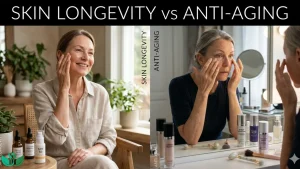
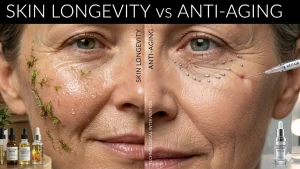
Traditional anti-aging is often reactive. It waits for damage to show up before trying to fix it with creams or needles. Skin longevity vs anti aging is a debate about philosophy. Longevity treats the skin as a living organ that needs long-term care. The goal is to keep the skin strong and healthy for as many years as possible. It is about adding life to your skin, not just hiding your age.
Biological Aging vs Chronological Aging Skin
Your birth certificate tells one story, but your cells tell another. This is the difference between biological aging vs chronological aging skin. Chronological age is the number of birthdays you have had. Biological age is how old your body actually acts.
You cannot stop the clock from ticking. However, you can influence how fast your cells age. Factors like sun exposure, high stress, and poor sleep change your biological age. By focusing on cellular health, you can keep your skin acting much younger than your actual age. This means your skin keeps its glow and bounce for decades longer.
Cellular Skin Healthspan
We often talk about lifespan, but healthspan matters more for your skin. Cellular skin healthspan is the period when your skin stays resilient and functional. Think of it as the “prime years” for your skin cells.
Healthy cells repair damage quickly. They produce plenty of collagen and stay hydrated naturally. When you support your skin at a cellular level, you extend this period of peak performance. You want your skin to function at its best even as you get older. This prevents the thinning and dryness that usually come with age.
The Rise of Prejuvenation for Gen Z and Millennials
Younger groups are not waiting for the first wrinkle to appear. Prejuvenation for Gen Z and Millennials is the new standard in beauty. This approach uses light treatments and smart skincare very early on.
It prevents deep lines before they even have a chance to start. By starting in your 20s or 30s, you maintain your natural collagen levels much longer. It is much easier to keep the collagen you have than to try and build it back later. This trend shows that the youth of today values prevention over correction.
Building a Bio-regenerative Skincare Routine
The future of beauty lies in repair, not just protection. A bio-regenerative skincare routine uses ingredients that talk to your cells. These include things like growth factors, peptides and exosomes.
These tools tell your skin to heal itself and build new, healthy tissue. This method does not force results through harsh chemicals or heavy peels. Instead, it works with your body’s natural rhythm to improve texture. It focuses on the root cause of aging rather than just the symptoms.
Proactive Skin Resilience
True beauty comes from proactive skin resilience. This means building a strong skin barrier that can handle daily stress. Use antioxidants like Vitamin C to fight pollution in the air.
Apply SPF every single day to stop UV damage before it hits your cells. When your skin is resilient, it bounces back from irritation or redness easily. You are not just fighting time. You are giving your skin the power to stay vibrant and healthy for a lifetime.
The Role of Senescent Cells
As we age, some cells stop dividing but do not die. Scientists call these “zombie cells.” They hang around and cause inflammation in the skin. This inflammation breaks down collagen and elastin.
Modern longevity research looks for ways to clear these cells out. By removing these “zombies,” we allow healthy cells to thrive. This keeps the skin firm and clear. It is a major part of keeping your biological age low.
How Lifestyle Impacts Your Skin
What you do outside of your bathroom matters just as much as your creams. Your skin is a mirror of your internal health. Eating a diet full of colorful vegetables provides the building blocks for new skin.
Regular exercise improves blood flow. This brings fresh oxygen to your face and carries away waste. High sugar intake can lead to a process called glycation. This makes your collagen hard and brittle. Choosing water over soda helps maintain that “lit from within” look.
The Science of Mitochondrial Health
Inside every skin cell are tiny power plants called mitochondria. These provide the energy for your skin to repair itself. As we age, these power plants slow down. This leads to dull, tired-looking skin.
Skincare products that support energy production help your skin stay active. When your cells have enough energy, they can fight off environmental damage. They can also produce more structural proteins like keratin and elastin.
Stress and the Skin-Brain Connection
High stress levels release a hormone called cortisol. Too much cortisol can break down the skin barrier. This leads to sensitivity, breakouts, and faster aging.
Managing your stress through meditation or walking can actually improve your skin. A calm mind often leads to a calm complexion. This is a key part of a long-term longevity plan. Your mental health and your skin health are tied together.
Sleep: The Ultimate Repair Window
Your skin does most of its heavy lifting while you sleep. This is when cell turnover happens at the fastest rate. If you skip sleep, you skip your skin’s natural repair cycle.
Poor sleep leads to dark circles and sallow skin. Try to get seven to nine hours of quality rest. Use a silk pillowcase to reduce friction on your face. This simple habit protects your skin from unnecessary tugging and pulling.
Environmental Defense Systems
We live in a world full of blue light and smog. These things attack our skin every hour. A good longevity plan includes a “shield” against these threats.
Look for ingredients like niacinamide to strengthen the skin barrier. Use mineral sunscreens that block both UV and blue light. Think of your skincare as an invisible suit of armor. The better your armor, the less damage your cells have to fix at night.
Customizing Your Routine by Decade
Your skin needs change as you move through life. In your 20s, focus on protection and hydration. This is the time for antioxidants and sunblock.
In your 30s, start adding ingredients that support collagen production. This is where peptides become very helpful. In your 40s and beyond, focus on moisture and skin thickness. Use rich creams that mimic the skin’s natural oils. Each stage of life requires a slightly different set of tools.
The Importance of Consistency
Great skin is not built in a day. It is built through small habits repeated every morning and night. You do not need a 10-step routine to see results.
A simple, effective routine you actually follow is better than a complex one you ignore. Stick with your products for at least three months. This gives your skin time to complete several turnover cycles. Patience is a vital ingredient in the quest for skin longevity.
Final Thoughts on the Future of Skin
The move toward longevity is a positive step for everyone. It moves us away from feeling bad about getting older. Instead, it celebrates the health and strength of our body’s largest organ.
Focus on how your skin feels. Is it hydrated? Does it feel strong? If the answer is yes, you are on the right track. By choosing resilience over quick fixes, you ensure your skin stays beautiful for decades to come. The future of skincare is not about stopping the clock. It is about making sure the clock works perfectly.
FAQ’s
Q: What is the main difference between longevity and anti-aging?
A: Anti-aging tries to reverse damage that is already there. Longevity focuses on keeping skin cells healthy and functional for a long time. One is reactive, while the other is a long-term plan for health.
Q: When should I start a longevity skincare routine? It is never too early to start.
A: Many people begin in their 20s to protect their natural collagen. This helps prevent deep lines and thinning skin before they start.
Q: Do I need expensive treatments for skin longevity?
A: No, you do not need a huge budget. The most important steps are daily sun protection and a healthy lifestyle. High-tech ingredients like growth factors help, but consistency matters more.
Q: Can I change my biological skin age?
A: Yes, you can influence your biological age. By lowering stress and protecting against the sun, you help your cells stay “younger.” Your lifestyle choices have a direct impact on how your skin ages.
Q: How long does it take to see results from these products?
A: Skin cells take about a month to turn over. You should stick with a new routine for at least 12 weeks. This allows you to see real changes in the health and texture of your skin.